People planning weddings, birthdays and company events in Estonia; local venues, creators and service providers who need a discoverable profile.
Product case study · Live event-services marketplace · Live product
Minupidu
A bilingual marketplace that helps people discover event professionals across Estonia while giving providers a structured way to publish services and receive enquiries.
RoleProduct structure · UX/UI · Content architecture · SEO direction
ScopeMarketplace, provider acquisition, city/category discovery, editorial content
DeliveredA real, crawlable product with category, city, listing and article pathways
BuildLive marketplace with public category, listing and editorial pages
01 / Context
The situation
Event planning is a fragmented search problem. Customers often start with an occasion, then jump between venue, catering, photography and entertainment providers. Providers have the opposite problem: they need qualified discovery without building a separate acquisition channel. The product therefore has to support two journeys without making the homepage feel like an admin portal.
A real, crawlable product with category, city, listing and article pathways.
02 / UX logic
Three decisions that shaped the product
Start from the customer’s vocabulary
Discovery is organised around recognisable service categories and cities, not internal marketplace taxonomy. This lets visitors move from an open question — “what do I need?” — to a comparable set of providers.
Give providers a short activation path
The provider journey is expressed as create account → complete profile → publish services → receive enquiries. Each step explains the value returned for the effort required.
Use content as part of the product
Category introductions and planning guides answer real questions, create useful internal links and give search engines descriptive context. SEO is treated as information architecture, not a layer of keywords added afterwards.
03 / Structure
Interface blueprint
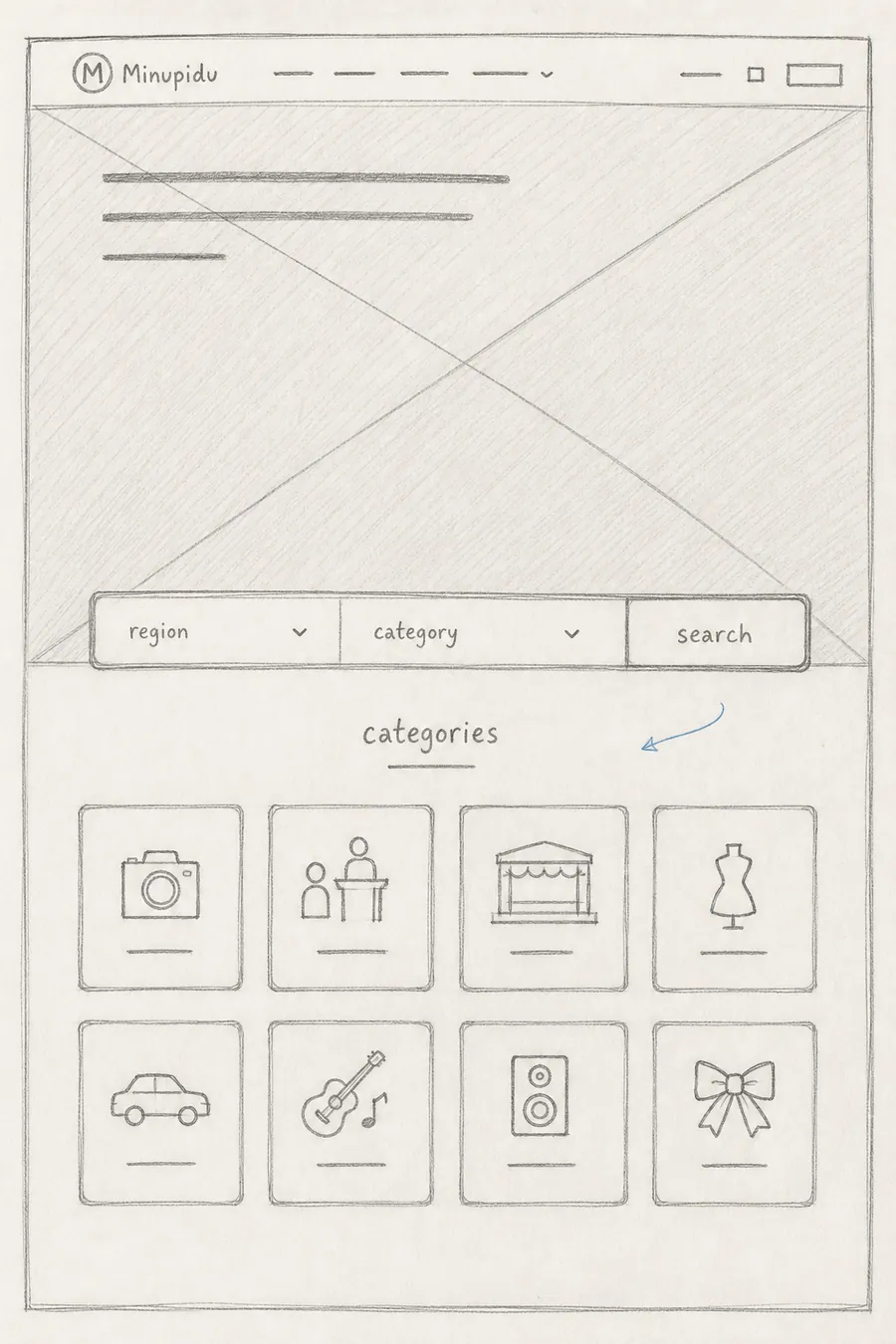
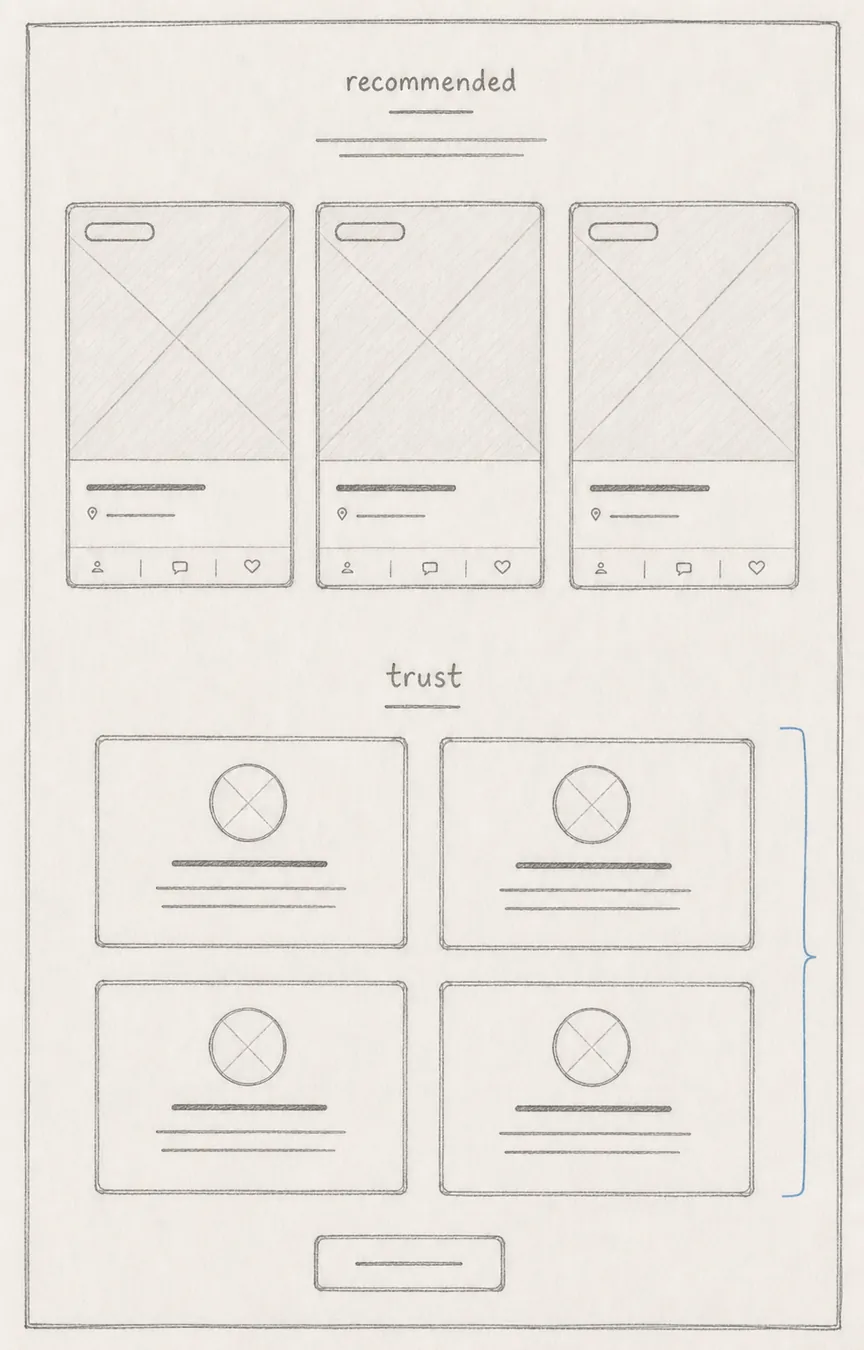
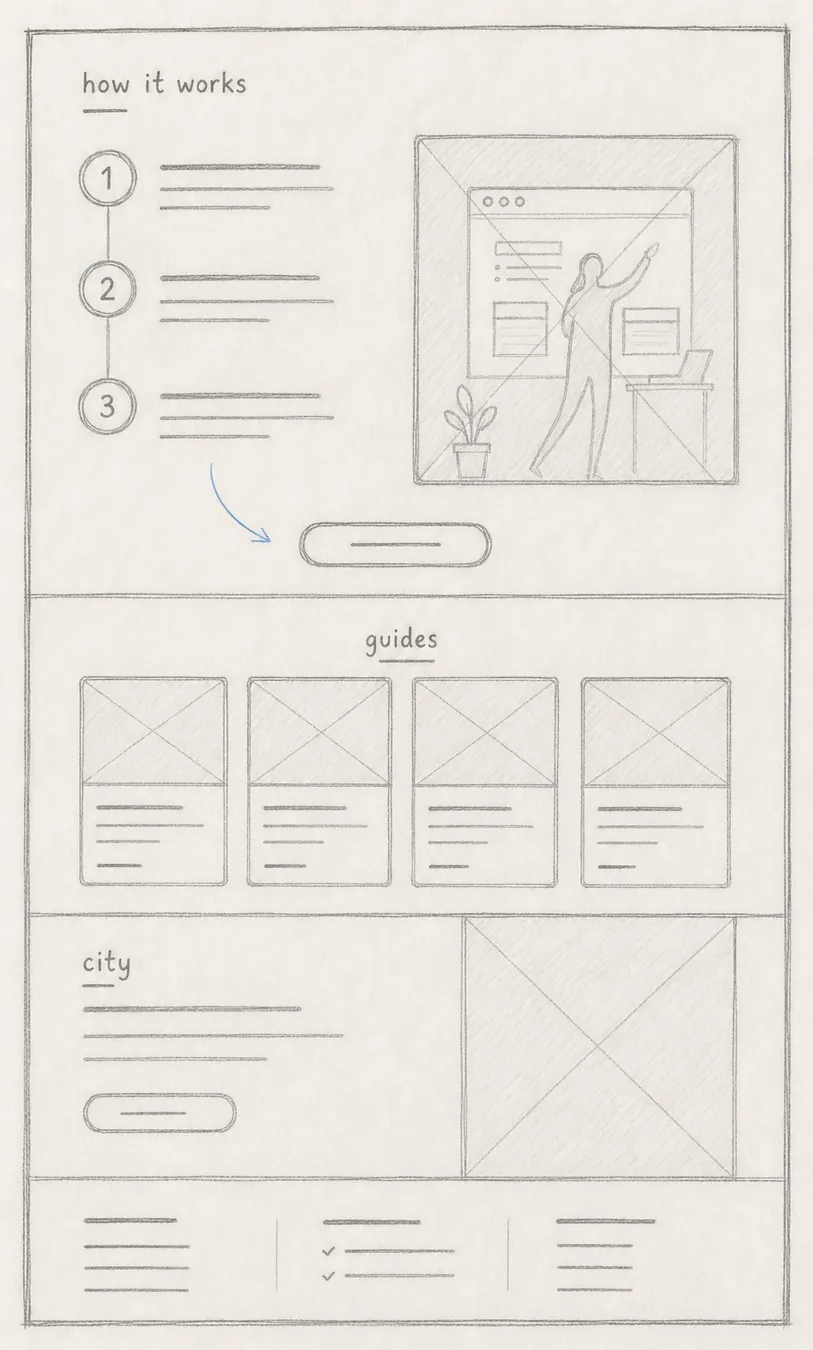
These diagrams map the real blocks, order and proportions used in the finished interface, making the layout decisions easier to inspect.
Search and categories01
Providers and trust02
Growth and local discovery03
04 / UI system
Visual system
White primary surfaces keep marketplace and account tasks clear, while light-gray secondary surfaces separate navigation and supporting panels. Near-black text establishes hierarchy, softer gray handles supporting information, and red is reserved for calls to action, outlines, icons, short dividers and active states.
#ffffff
#f5f5f5
#222222
#ff3434
05 / Final interface
Final interface
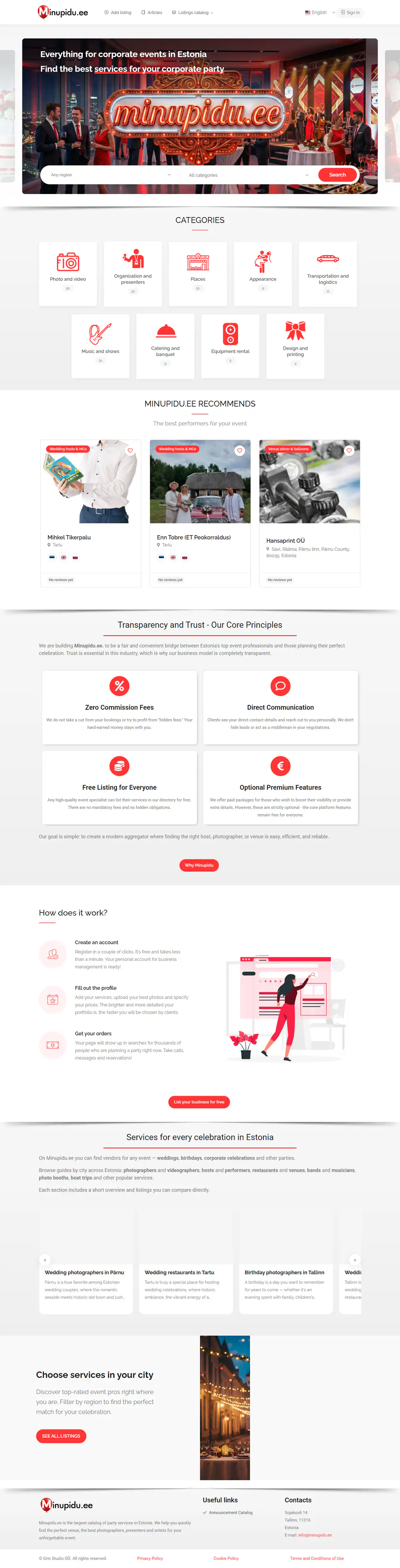
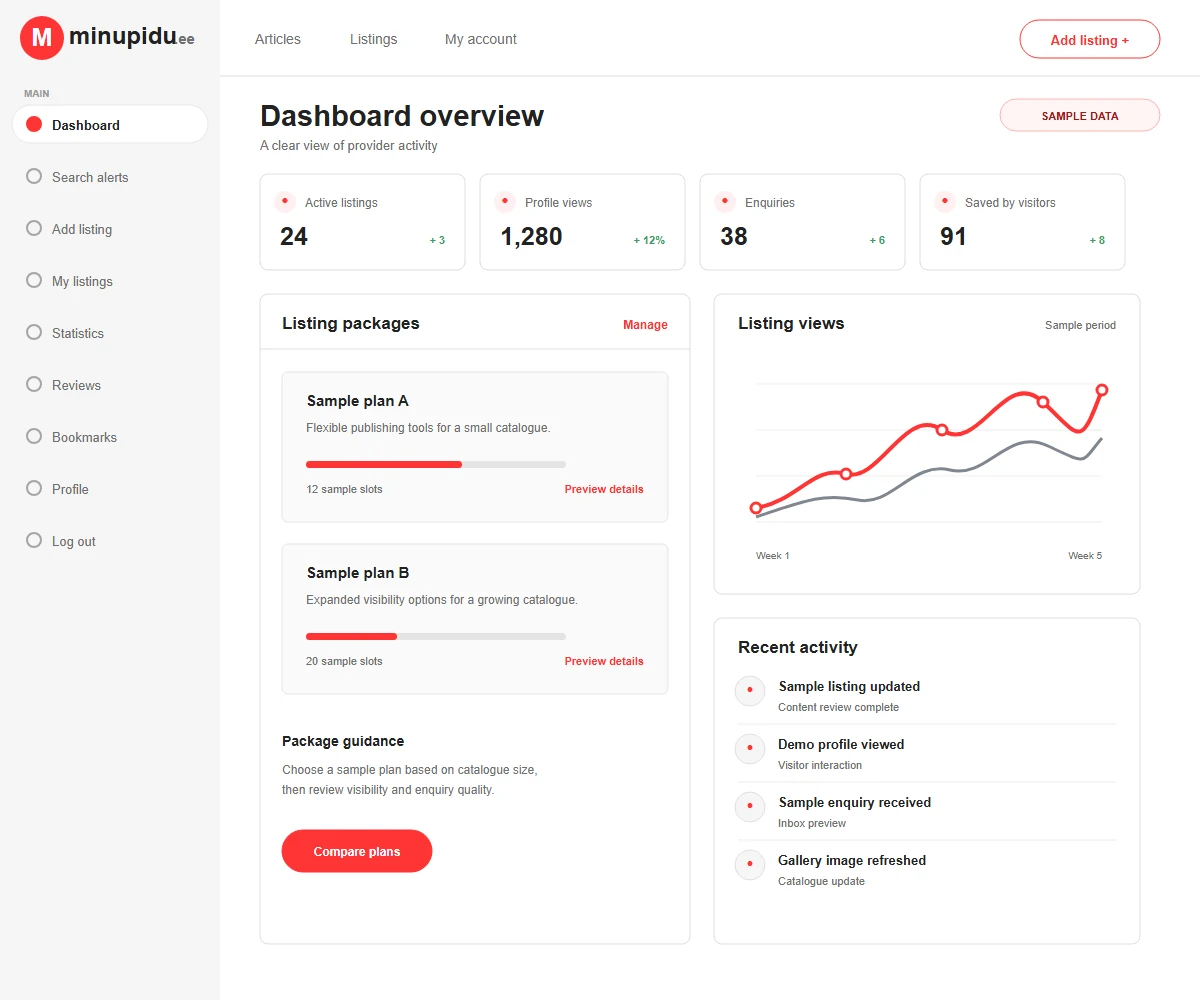
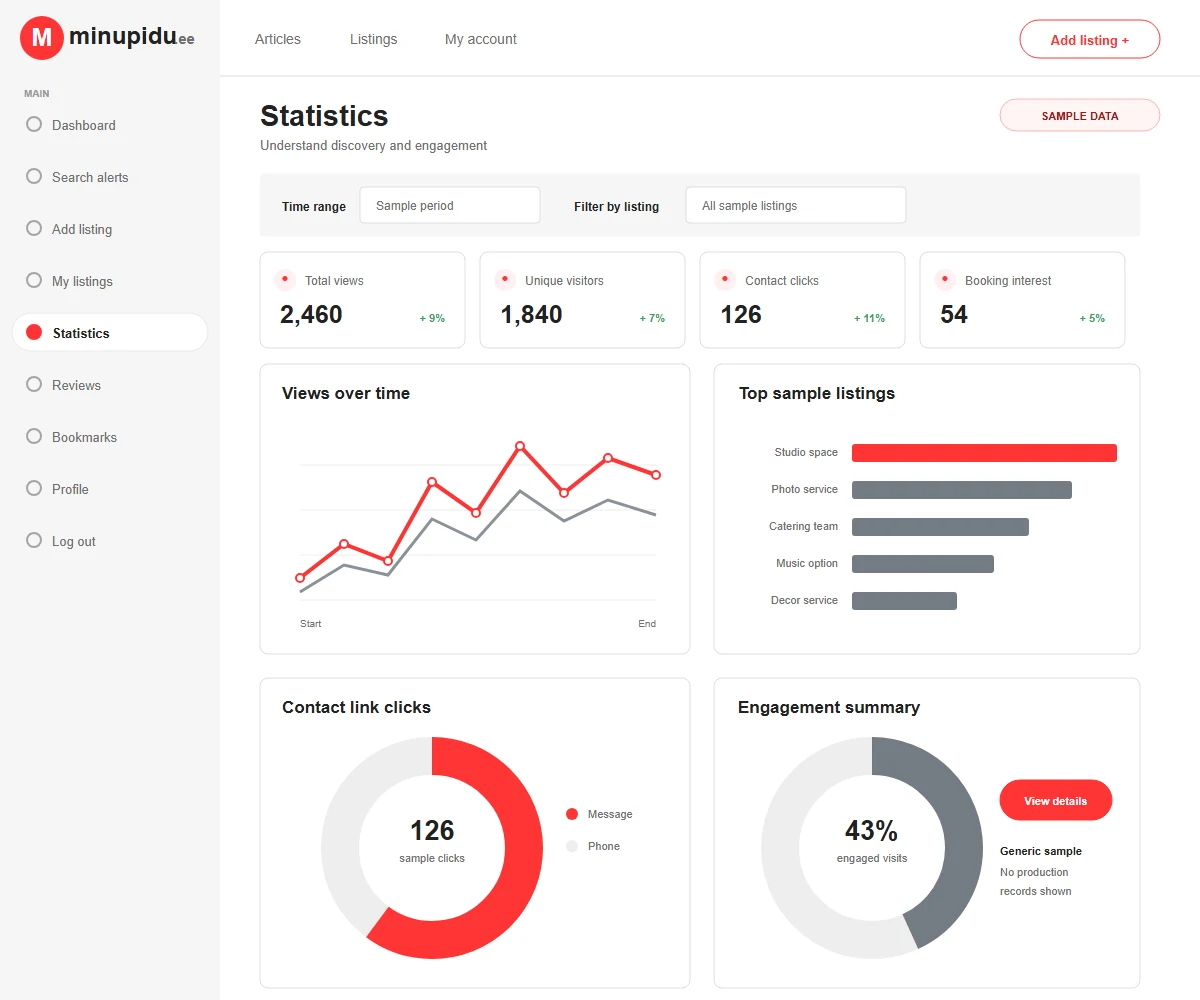
Explore the current customer-facing marketplace separately from these interface images.
Visit the live Minupidu marketplace ↗06 / Business impact
What the work changes
A real, crawlable product with category, city, listing and article pathways
The live product connects category and city discovery, provider profiles, bookmarks, accounts and provider onboarding. Planning guides add useful entry pages for people who begin with a question rather than a vendor name.
Track the share of visitors who reach a provider and open a contact route.
Measure how many new providers complete a useful, searchable profile.
Compare city and category landing pages by qualified downstream action.