A person attempting to share their current location with an assistance service under time pressure.
Product case study · Emergency location flow · Functional prototype
UltraTrax SOS
A mobile-first emergency flow that requests location permission, communicates progress and provides clear success and retry states.
RoleCritical-flow UX · State design · Responsive prototype
ScopePermission, geolocation, validation, progress, success, failure
DeliveredAn end-to-end browser prototype for a high-stress task
BuildFunctional geolocation prototype with success, denial and retry states
01 / Situation
The situation
In an emergency, attention and motor precision may be limited. The flow must make the primary action unmistakable, explain why location access is needed and recover clearly when the browser or user blocks the request.
Prepare → Locate → Resolve
02 / Design logic
Design decisions
One dominant action
The initial screen protects a single high-priority button from competing navigation and secondary choices. Supporting copy is short and operational.
Explain permission at the moment it matters
Location access is framed as the mechanism for sending help, not as a generic technical request. This improves informed consent without adding a separate onboarding sequence.
Design failure as a route, not a dead end
Unsupported location, denied permission and acquisition errors return specific guidance and a retry path. Success confirms what happened and makes the next action explicit.
03 / Structure
Interface blueprint
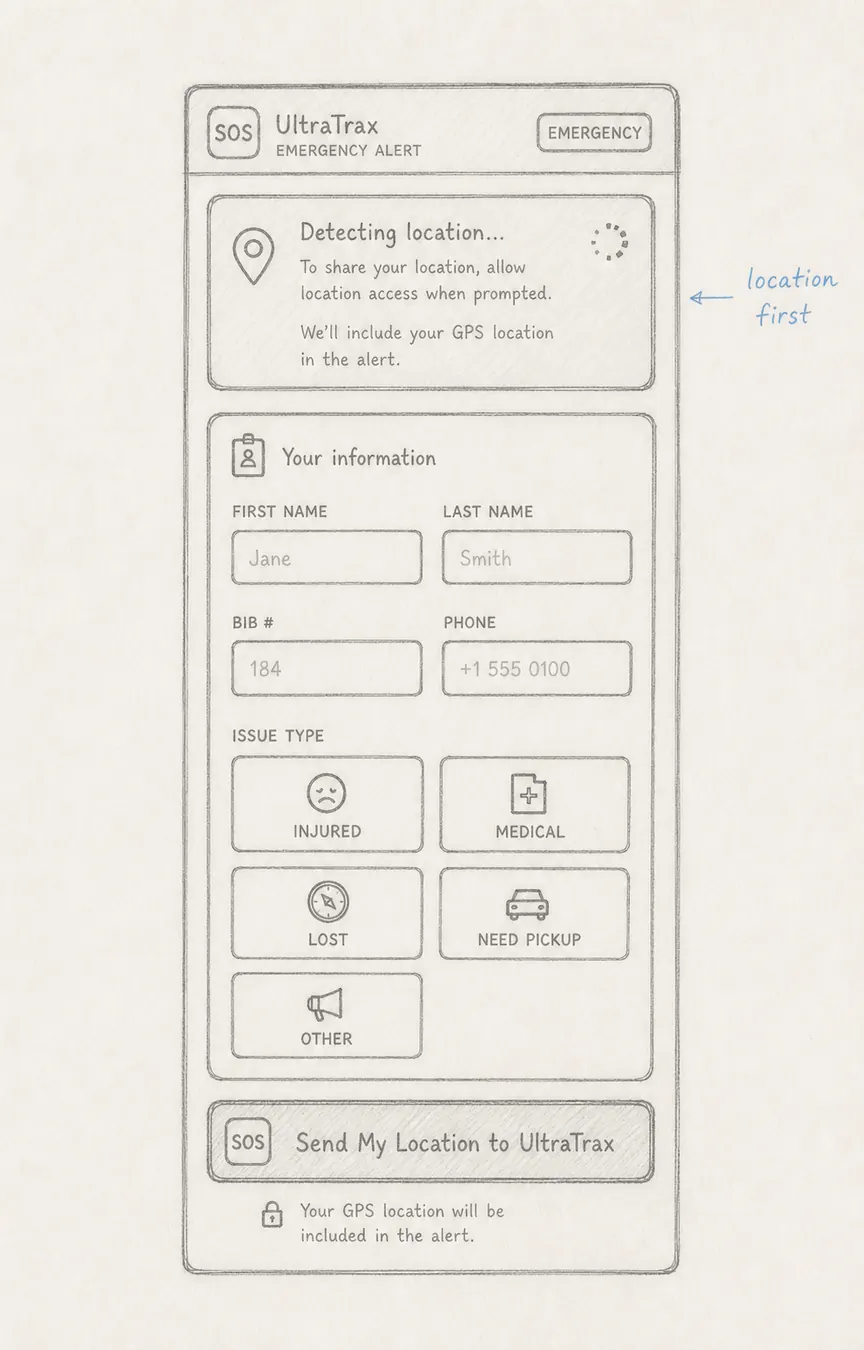
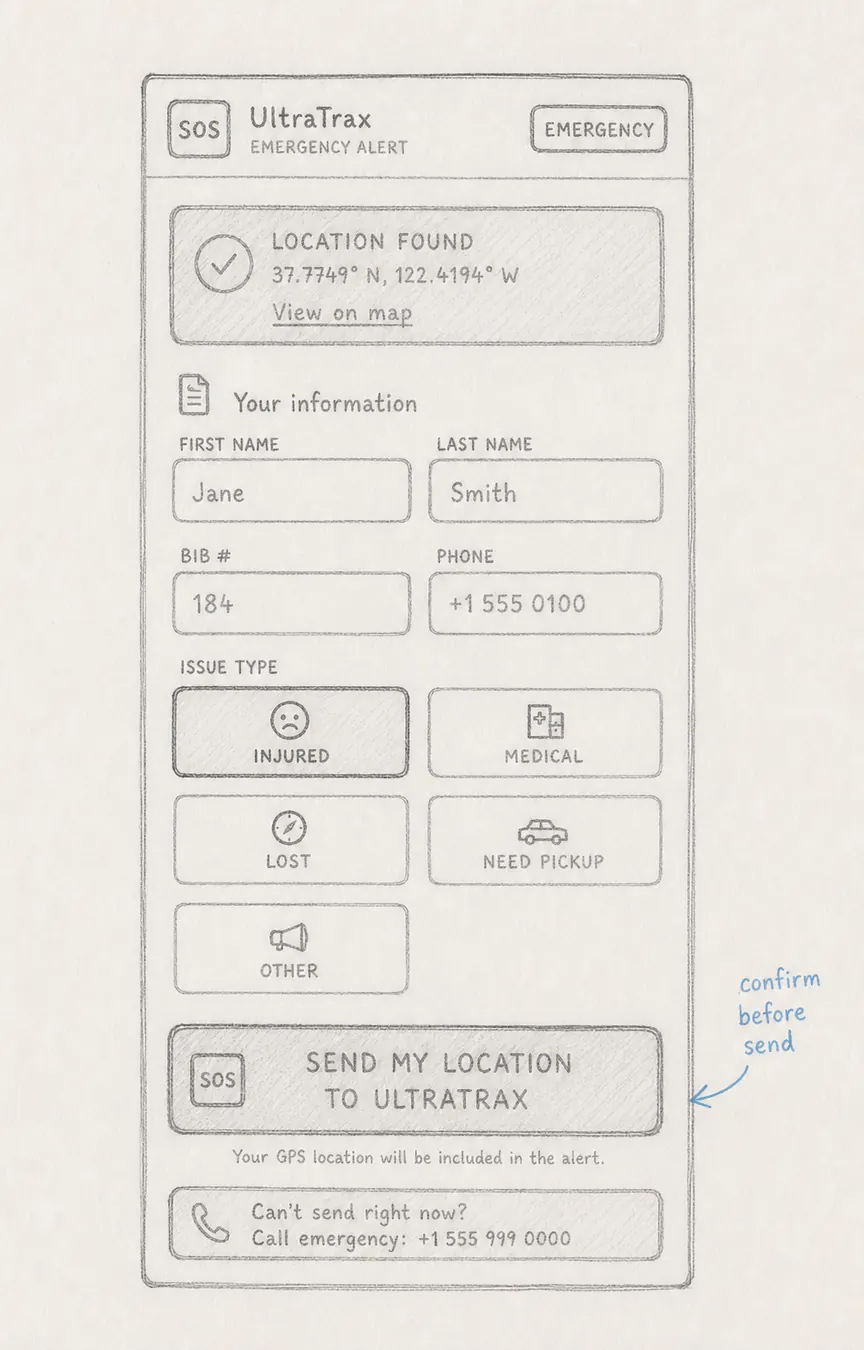
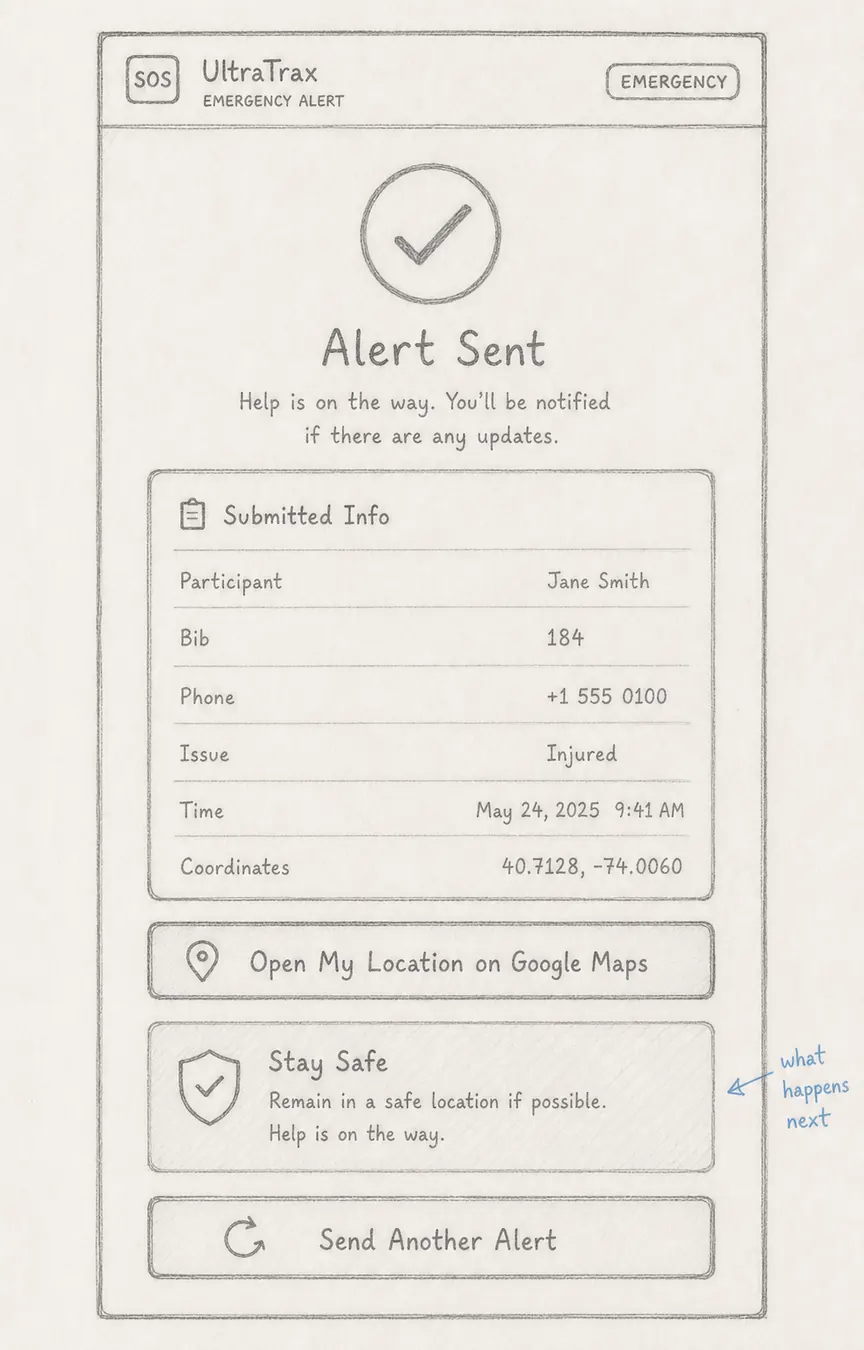
These diagrams map the real blocks, order and proportions used in the finished interface, making the layout decisions easier to inspect.
Prepare01
Locate02
Resolve03
04 / Final interface
Final interface
05 / Business impact
What the work changes
An end-to-end browser prototype for a high-stress task
The mobile flow requests location only after the user starts the SOS action, explains what is happening and provides distinct success, denial and retry states. The sequence is short enough to use under stress and explicit enough to recover from a blocked permission.
Measure completion time and permission drop-off on supported devices.
Track whether the explanation helps users recover without support.
Verify that downstream responders receive complete request context.